
“Blood is a very special fluid,” as Johann Wolfgang von Goethe writes in *Faust I*. The great poet is certainly right about that. Human blood has impressive properties that many people are completely unaware of. That’s why we’re dedicating this blog post to the topic of blood. We’ll share 5 interesting facts about our blood with you.
1. Blood Volume: How much blood do we actually have?
An adult’s blood volume is about 5 to 6 liters. This accounts for about 7 to 8 percent of body weight. Of course, the exact amount of blood varies. It depends, among other things, on a person’s height and weight, as well as on gender, age, and overall health. On average, men have slightly more blood than women. Heavier people also have a little more blood to ensure that every organ and tissue is well supplied. When blood is lost, the body can replace it quickly.
2. Color: Why Is Blood Red, Anyway?
Blood consists of various components. The most important ones are platelets, white blood cells, and red blood cells. The latter are responsible for the color of the blood. Red blood cells contain a substance called hemoglobin, an iron-containing protein. It is necessary for transporting oxygen, one of the blood’s most important functions. When it comes into contact with oxygen, hemoglobin turns red. Something similar happens to iron outside the body: when exposed to oxygen, it rusts and turns red.
3. Blood Types: What Is Their Significance?
Not everyone’s blood is the same—quite the opposite, in fact. The most common and important blood-group classification distinguishes between blood groups A, B, AB, and 0. These refer to specific antigens on the surface of red blood cells: antigen A and antigen B:
- About 46% of the world’s population has neither of these two antigens on their red blood cells. They have blood type 0.
- About 40% of people have blood type A. This means they have the A antigen.
- Blood type B (with the B antigen) is less common: Only about 11% of the world’s population has it.
- Blood type AB, which has both antigens, is the rarest, accounting for 3% of the population.
4. The Immune System: How Does Blood Affect the Immune System?
The immune system and the blood are closely linked. White blood cells (also called leukocytes) are particularly important.
There are different types of white blood cells that specialize in fighting off specific pathogens. Antibodies are another important component of the immune system. These special proteins are released into the bloodstream by the body and distributed throughout the body from there.
5. Healthy Blood: How Can I Support My Body?
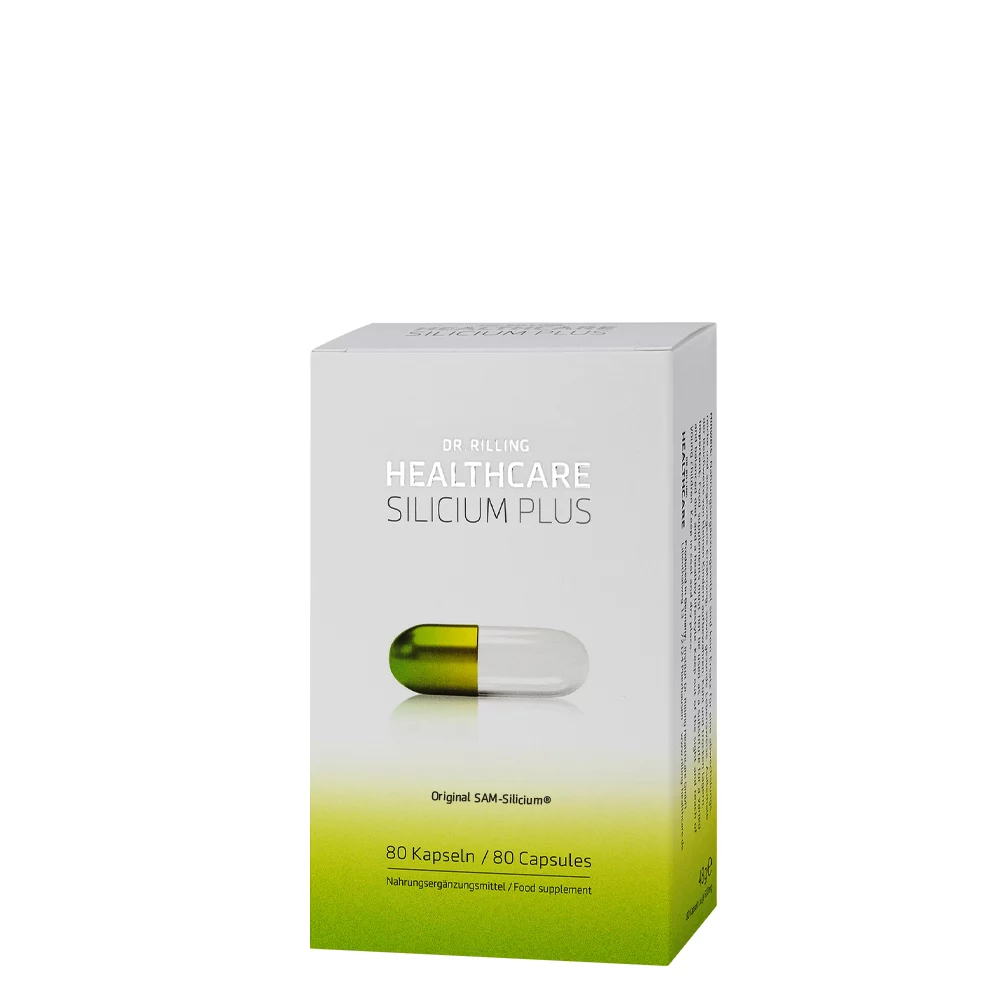
Blood performs many vital functions. To do so, it needs minerals such as calcium. Calcium in the bloodstream plays a role in blood clotting, for example, as well as in muscle contraction and healthy nerve function. Vitamin K also plays a role in blood clotting. To ensure your body gets what it needs, you should make sure you’re getting enough of these important nutrients. You can support your body with SILICIUM PLUS or the new SILICIUM PRIME.
Recommended products: SILICIUM PLUS and SILICIUM PRIME contain calcium. SILICIUM PRIME also contains vitamin K2. Calcium and vitamin K2 contribute to normal blood clotting.
Read more in our guide
You can find all the articles compiled in the section Health & Nutrition.